
Table of Contents
- What You'll Need Before You Start
- Your Wine Tasting Party Checklist
- How Much Wine Per Person for Tasting
- Wine and Food Pairing Guide for Small Groups
- How to Structure the Tasting Flow
- Budget-Friendly Sourcing and Digital Tools
- Non-Alcoholic Alternatives and Inclusive Hosting
- Common Mistakes to Avoid
- Frequently Asked Questions
Last Updated: September 22, 2026
What You'll Need Before You Start
Learning how to host small wine tastings comes down to four things: a clear theme, the right number of bottles, the right glassware, and a plan for the order you pour in. Get those right and the evening runs itself. This guide from Little River Winery walks through each step, including the logistics most hosts only think about halfway through the night.
Small wine tastings work best with six to ten guests. Any more and the conversation splinters. Any fewer and you lose the group energy that makes a tasting fun.
Here's the short version of what you need:
- Six to ten guests, invited with a theme in mind
- Four to six bottles, depending on group size
- One glass per person per wine, or a rinse station
- Water, bread, and a spit bucket
- Tasting cards and pens
- A printed pour order
That's it. Everything else is comfort, not function.
Your Wine Tasting Party Checklist
A wine tasting party checklist keeps you from mid-event panic. Build it in three parts: what you buy, what you set up, and what you hand out.
Buy:
- Four to six bottles across a single theme
- Still water and plain bread or crackers
- A neutral cheese or two for later
Set up:
- Glasses, one per wine per guest
- A spit bucket or large jug
- Napkins and a water pitcher
- A clear table with room to move
Hand out:
- Tasting cards
- Pens
- A printed pour order
Work through the list the day before, not the hour before. Most hosting stress comes from leaving setup to the last minute.
Glassware and Spit Buckets
Use a proper wine glass with a stem and a tulip-shaped bowl. The stem keeps your hand off the bowl, so the wine stays at the right temperature. The bowl shape traps aroma, which is most of what you're actually tasting.
You don't need a different glass for every wine. Two per guest is plenty if you rinse between pours. A spit bucket matters more than most hosts expect. Even a small jug works. Guests who spit stay sharp through the whole flight, and the tasting stays about flavour rather than volume.
Tasting Cards and Palate Cleansers
Tasting cards give guests something to write on and a reason to pay attention. Keep them simple: wine name, vintage, and three lines for aroma, taste, and finish.
Palate cleansers reset your mouth between wines. Good options:
- Plain bread or water crackers
- Still water at room temperature
- A small piece of mild cheese
Avoid strong flavours like blue cheese or heavily salted snacks. They dull your sense of taste for the next pour.
How Much Wine Per Person for Tasting
The standard pour for a tasting is about 30ml per wine. At that size, a 750ml bottle serves roughly 20 to 25 pours, which is plenty for a group of eight tasting five wines.
Here's the quick maths for a typical evening:
| Guests | Wines | Pour size | Bottles needed |
|---|---|---|---|
| 6 | 5 | 30ml | 4 |
| 8 | 5 | 30ml | 5 |
| 10 | 6 | 30ml | 6 |
| 8 | 6 | 45ml | 6 |
If you're pouring closer to a full glass, add a bottle. If guests are spitting, you can drop one. Always buy one spare bottle of your favourite from the flight. Someone will want a second pour of it.
Wine and Food Pairing Guide for Small Groups
The best wine and food pairing guide for a small group is one built around contrast, not competition. Match weight to weight, and match acidity to richness. The goal is not a dinner party, it is a palate reset that keeps the wine the main event.
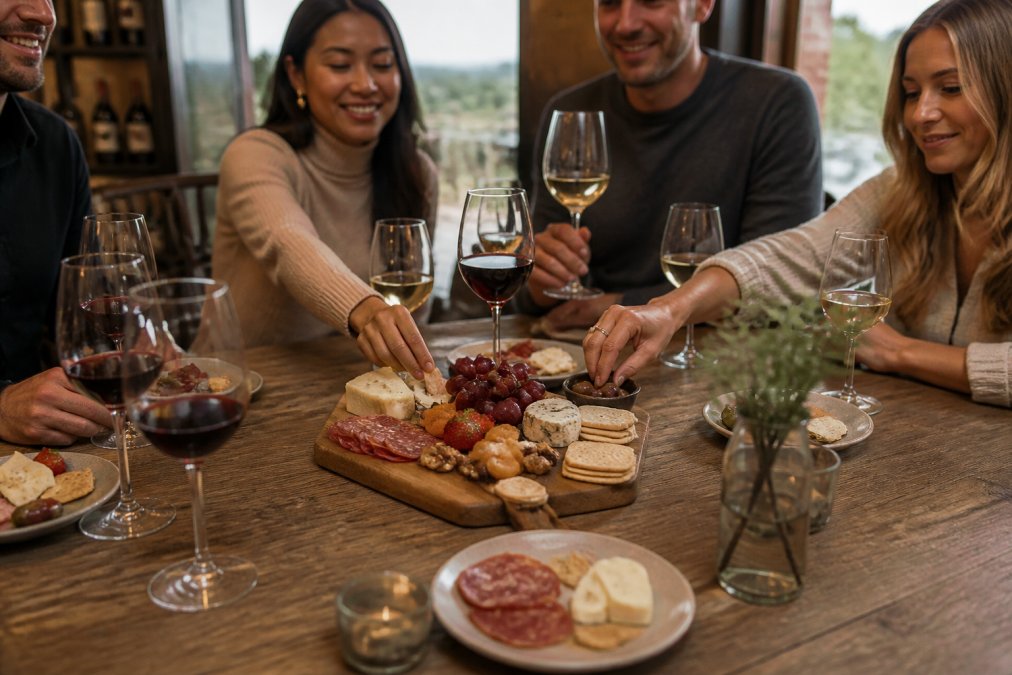
Keep the food light and let the wine lead. A few rules that hold up:
- Sparkling wine with salty or fried food
- Crisp dry white with soft cheese and seafood
- Rose with charcuterie and light salads
- Shiraz with aged cheddar or grilled red meat
Serve food after the tasting, not during it. It keeps the palate clean and gives the evening a natural second act.
- One or two cheeses (about 150g total per person)
- A small charcuterie selection (about 100g per person)
- Plain crackers or a sliced baguette
- A bowl of olives or nuts
- Still water and a few slices of green apple
How to Structure the Tasting Flow
Structure your tasting from light to heavy, and dry to sweet. That order protects your guests' palates and lets each wine show its best side.
A five-wine flow that works for most groups:
- Sparkling, to wake up the palate
- Crisp dry white
- Rose or a fuller white
- Light red
- Fuller red or a sweet finish
- 0-10 minutes: welcome pour (sparkling) and introductions
- 10-30 minutes: wines one and two, with a short discussion after each
- 30-45 minutes: palate cleanser and a stretch break
- 45-75 minutes: wines three and four
- 75-90 minutes: wine five and final notes
- 90-120 minutes: food, informal discussion, and any leftover pours
Blind Tasting and Decanting Tips
Blind tasting means pouring without telling guests what's in the glass. Cover the bottle or pour in another room. It forces people to rely on aroma and taste rather than the label, and it's the fastest way to find out what you genuinely like.
A few practical notes:
- Decant young, tannic reds; leave delicate whites in the bottle
- Use a bottle stopper on anything you don't finish
- Keep whites in an ice bucket, reds at room temperature
- Rinse glasses with a small amount of the next wine rather than water if you are not using a fresh glass
Budget-Friendly Sourcing and Digital Tools
You can run a strong tasting without spending much. Buy by the mixed case where you can. Many wineries offer a better rate when you mix a case rather than buy single bottles, and it lets you build a flight around one producer.
Digital tools take the admin out of hosting:
- A shared note or spreadsheet for the pour order
- A phone timer for blind tasting rounds
- A tasting notes app so guests can log what they liked
- A group chat for the invite and the address
Non-Alcoholic Alternatives and Inclusive Hosting
Not every guest drinks, and a good host plans for that without making it a thing. Offer a non-alcoholic pour in the same glass, at the same time, so nobody sits with an empty hand.
Options that work:
- Sparkling water with a slice of citrus
- Non-alcoholic sparkling wine
- A lightly sweetened iced tea
- Plain water in a wine glass
Common Mistakes to Avoid
The mistakes that ruin a tasting are almost always about pacing and quantity, not wine quality. Fix these five and your evening runs well.
- Pouring too much per wine
- Serving food during the flight instead of after
- Skipping the spit bucket
- Pouring without an order
- Forgetting water
Frequently Asked Questions
How many wines should you serve at a small tasting?
For a group of 8 to 10 guests, serve between four and six wines. This gives everyone a chance to compare styles without overwhelming the palate. Start with a sparkling like Little River Winery's Brut de Brut, move to a dry white such as Blancs 2019, then a rose like Florial 2025, and finish with a red such as Shiraz 2022. Fewer wines mean larger pours and more time to discuss each one.
What food should be served at a wine tasting?
Keep food simple so it complements rather than competes with the wine. A charcuterie board with mild cheeses, cured meats, plain crackers and fresh fruit works well. For a structured wine and food pairing guide, match crisp whites with soft cheeses, rose with light salads, and old vine Shiraz with aged cheddar or dark chocolate. Avoid heavily spiced dishes that dull the palate and overpower delicate tasting notes.
How much wine do you need per person for a tasting?
Plan for 60 to 80 millilitres per wine per guest, which is roughly six to eight pours from a standard 750 millilitre bottle. For a tasting of five wines with 10 guests, you need about four bottles total. If you are unsure, buy one extra bottle of each style.
Do you need to provide spit buckets for home wine tastings?
Yes, spit buckets are practical even at a relaxed home tasting. Guests who want to stay clear-headed or pace themselves can discreetly spit rather than swallow. Use small opaque containers or labelled cups placed between every two guests. Pair each spit bucket with a glass of water for rinsing. This keeps the tasting comfortable and lets everyone enjoy the full flight without feeling pressured to finish every pour.
Planning a tasting means juggling pour sizes, glass counts, and a flow that keeps everyone engaged from the first pour to the last. Little River Winery makes that easier with a curated range built for exactly this kind of evening, from the Brut de Brut sparkling through to the old vines Shiraz, plus cellar door tastings capped at 8 to 10 guests so your group gets proper attention. Get started with Little River Winery and build a flight your guests will still be talking about next week.