
Table of Contents
- The Four Pillars: Tannin, Acidity, Alcohol and Body
- Wine Tasting Techniques for Beginners: The Five S's
- Understanding Wine Labels Australia: What the Label Tells You
- How to Identify Wine Faults Before You Pour
- Serving Temperature and the Best Wine Cooling Units for Home
- Matching Wine to Food and Occasion
- Frequently Asked Questions
Last Updated: September 24, 2026
The Four Pillars: Tannin, Acidity, Alcohol and Body
Knowing what to look for in wine starts with four structural elements: tannin, acidity, alcohol and body. These pillars decide whether a wine feels lean or rich, harsh or smooth, and whether it will improve with age.
Tannin is the drying, grippy sensation on your gums, drawn mostly from grape skins, seeds and oak. It is a preservative, which is why high-tannin reds such as Shiraz and Cabernet Sauvignon can improve for a decade or more, while low-tannin whites are best drunk young. If your mouth feels chalky or furred after a sip, that is tannin. If it feels smooth and slippery, the tannin is either low or well-integrated.
Acidity is the refreshing bite that keeps a wine lively. It is measured on the pH scale, most table wines sit between roughly 3.0 and 3.8, with lower numbers tasting sharper. Acidity is what makes you salivate after a sip and what cuts through rich, fatty food. A wine that tastes flat or flabby usually lacks it; a wine that makes you wince is too high.
Alcohol adds weight and warmth. In Australia, table wine typically ranges from about 11% to 15% alcohol by volume, and the figure is printed on every label. Higher alcohol gives a rounder, heavier mouthfeel and a noticeable heat at the back of the throat, while lower alcohol feels lighter and more refreshing. Alcohol also affects how the wine ages: very high alcohol can shorten a wine's useful life.
Body is the overall impression of fullness on the palate, the difference between skim milk and full cream. It is the sum of the other three pillars plus grape variety and winemaking. A cool-climate Pinot Noir is light-bodied; a warm-climate Shiraz is full-bodied.
How the Pillars Interact
The pillars do not work in isolation. High tannin needs matching acidity and fruit weight to stay balanced, or the wine tastes harsh. High alcohol needs enough acidity to stay fresh, or it tastes flabby. A wine is 'balanced' when no single pillar shouts louder than the others, that balance, more than any single number, is what separates a good bottle from a great one.
Reading the Clues in the Glass
Tilt the glass against a white background. Colour intensity hints at grape variety and age: deep purple suggests a young, full-bodied red, while brick edges point to a wine with some years behind it. Swirl and watch the "legs" or tears run down the side. Thick, slow legs suggest higher alcohol or viscosity; fast, thin legs point to a lighter wine.
Clarity matters too. A bright, clean wine is generally sound, whereas a hazy or dull appearance can signal a fault or simply an unfiltered style. Sediment in an older red is normal and harmless, but crystalline deposits in a white are worth noting.
Wine Tasting Techniques for Beginners: The Five S's
The five S's, See, Swirl, Sniff, Sip and Savour, form the backbone of wine tasting techniques for beginners. Each step isolates one sense so you can assess colour, aroma, palate and finish in order. Practise them slowly and the process becomes second nature within a few bottles.
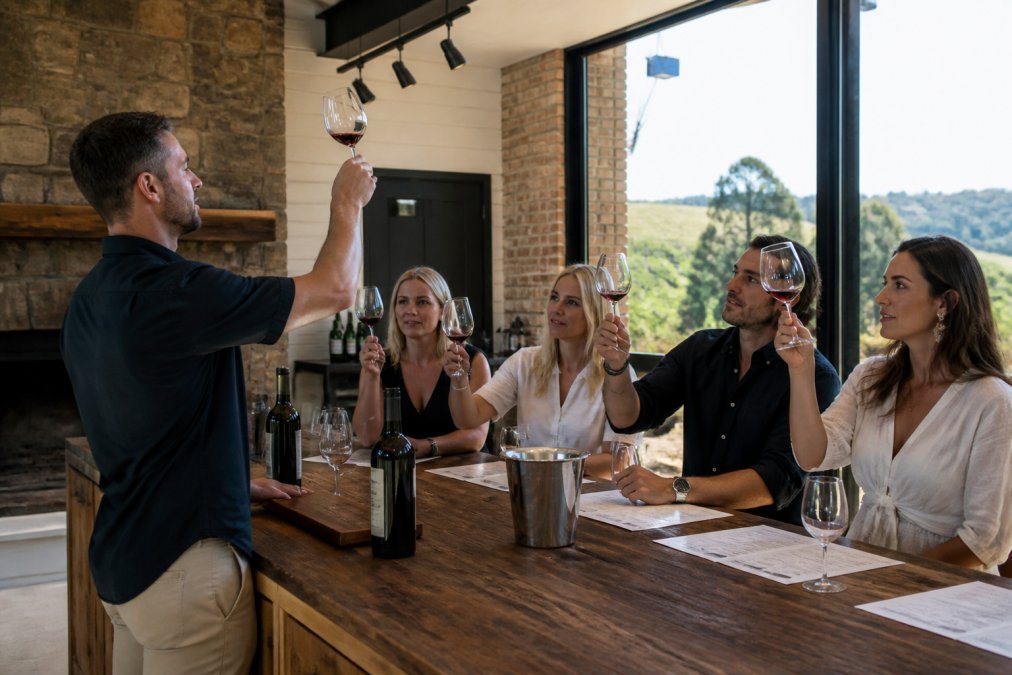
- See: Tilt the glass and check colour, clarity and intensity.
- Swirl: Release the aromas by swirling gently for a few seconds.
- Sniff: Take a short, sharp sniff, then a deeper one. Note fruit, floral or earthy characters.
- Sip: Take a small mouthful, draw air across it, and let it coat your palate.
- Savour: Note the finish. A long, lingering finish usually signals quality.
Understanding Wine Labels Australia: What the Label Tells You
Understanding wine labels Australia is largely about knowing what must legally appear and what is optional. Labels must state the volume, alcohol content, and standard drinks, along with allergen declarations and a pregnancy warning. The grape variety and vintage are shown when the wine meets the required minimum content for that variety, in Australia, a wine labelled as a single variety must contain at least 85% of that grape.
Reading Eco-Certification Labels
This is where most guides stop, and where a little knowledge pays off. A growing number of Australian wines carry certification logos, and each one means something specific:
- Organic certification, the vineyard and winery have met a defined standard limiting synthetic pesticides and additives. In Australia, look for the logo of a recognised certifying body; the word "organic" alone on a label is not a guarantee.
- Biodynamic certification, a stricter, holistic farming standard that includes organic practices plus preparations and a closed-farm philosophy. Again, the certifying body's logo is the proof.
- Vegan-friendly, indicates no animal-derived fining agents (such as egg white or isinglass) were used. This is usually a producer claim rather than a formal certification.
- Sustainable, often a regional or industry program rather than a single national standard, so read the fine print to see what was actually measured.
The Back Label: Your Best Buying Tool
The back label carries the practical detail the front label hides. Look for the batch or lot number, the standard drinks count, allergen statements (sulphites, egg, milk), and the bottling date. A bottling date tells you how fresh the wine is, useful for whites and rosés you plan to drink soon. The standard drinks figure also lets you compare alcohol strength across bottles at a glance.
How to Identify Wine Faults Before You Pour
Learning how to identify wine faults before you pour saves you from serving a dud to guests. The most common fault is cork taint, a musty, damp-cardboard smell caused by a contaminated cork. Oxidation, by contrast, smells like sherry or bruised apple and turns white wines brown.
Serving Temperature and the Best Wine Cooling Units for Home
Serving temperature changes a wine more than most people realise, and the best wine cooling units for home keep that variable under control. Warmth exaggerates alcohol and flattens aroma; excessive chill mutes fruit and tightens tannin. Sparkling wines sit best around 6-8°C, crisp whites around 8-10°C, fuller whites near 10-12°C, and reds between 16-18°C.
| Wine Style | Serve At | Quick Cooling Method |
|---|---|---|
| Sparkling | 6-8°C | Ice bucket, 20 minutes |
| Crisp white | 8-10°C | Fridge, 45 minutes |
| Full white | 10-12°C | Fridge, 30 minutes |
| Red | 16-18°C | Cool room, 15 minutes |
Matching Wine to Food and Occasion
Food pairing works best as a selection metric, not an afterthought. Match weight to weight: a light dish calls for a light wine, a rich dish for something fuller. Acid cuts through fat, tannin stands up to red meat, and sweetness tames heat.
Frequently Asked Questions
How can you tell if a wine is high quality?
Start with balance. A quality wine has tannin, acidity, alcohol and body working together, with none dominating. Look for clarity in the glass, a clean aroma without mustiness, and a finish that lingers pleasantly rather than dropping off. Faults such as cork taint or oxidation are immediate red flags. Price and vintage help, but your own palate is the final judge, so taste before committing to a case.
What are the 5 S's for wine tasting?
The five S's are See, Swirl, Sniff, Sip and Savour. See checks colour and clarity. Swirl releases aroma compounds. Sniff identifies the bouquet, from fruit-forward notes to earthy or spicy characters. Sip assesses tannins, acidity and body on the palate. Savour considers the finish. These wine tasting techniques for beginners build a repeatable routine, so you judge every glass the same way.
What should I look for when buying wine at a bottle shop?
Check the label for variety, vintage, region and alcohol content, then read any back-label notes on oak or sweetness. Inspect the bottle: a protruding cork or sticky residue suggests heat damage, and a fill level well below the neck points to oxidation. For sparkling, confirm it is sealed correctly. If you can taste first, do, and ask staff about serving temperature before you buy.
How does the colour of a wine indicate its age and variety?
White wines deepen from pale green-gold toward amber as they age, while reds fade from deep purple toward brick or garnet at the rim. Colour also hints at variety and style: a pale, brisk white often signals cool-climate fruit, while an inky red suggests thick-skinned grapes and firm tannins. Hold the glass against a white background to judge clarity and hue accurately.
What role does the finish play in evaluating a wine?
The finish is how long the flavours and mouthfeel persist after you swallow. A long, clean finish usually signals good concentration and balance. A short or harsh finish can mean high alcohol, unripe tannins or a fault. Count the seconds: anything beyond about ten seconds of pleasant flavour is a strong sign the wine is worth cellaring or buying by the case.
How do I know a wine is faulty rather than just unfamiliar?
Faults have specific signatures. Cork taint smells of damp cardboard or musty basement. Oxidation gives a flat, sherry-like or bruised-apple character. Volatile acidity reads as vinegar or nail polish. Sediment in an older red is normal, but cloudy, fizzy or brown-tinged wine is not. If a fault is present, return the bottle, as most retailers and producers will replace it.